Northern Lights: Science, Clouds & Unvarnished Realities
Let's start with an honest baseline: nobody can guarantee that you will witness the Northern Lights on a specific week in Lapland. Anyone selling a 100% guarantee is either selling fiction or planning to drive you into an entirely different country's microclimate.
The Aurora Borealis is a delicate convergence of space weather occurring 100 to 300 kilometers above the planet, coupled with local tropospheric cloud formations happening just one or two kilometers over your head. When both align, the experience is otherworldly. Understanding how these factors interact is the best way to avoid heartbreak.
How the Aurora Actually Works
The sun continuously ejects a stream of charged particles — the solar wind — into interplanetary space. When coronal mass ejections or coronal holes release denser plasma streams, these particles collide with Earth's protective magnetic field (the magnetosphere).
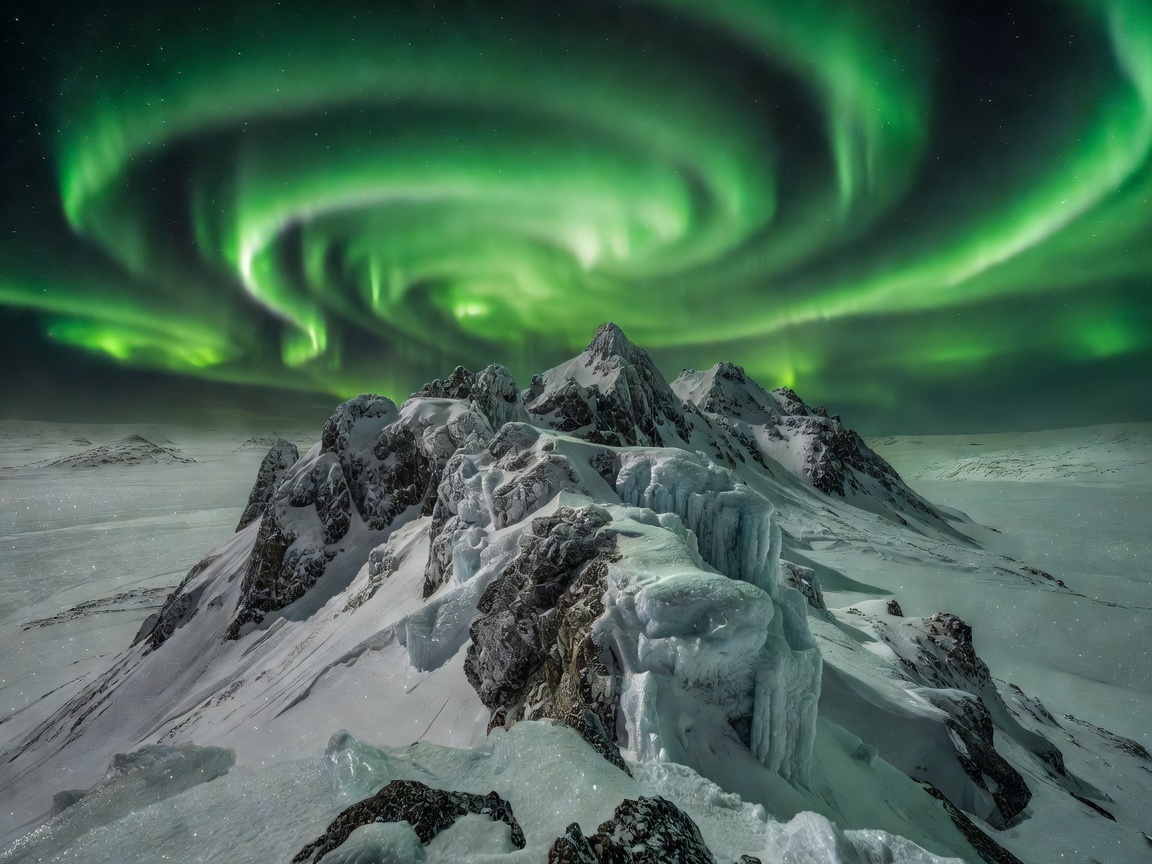
Funneled along magnetic field lines toward the polar regions, these high-energy electrons collide with gas molecules in our upper atmosphere. When they hit oxygen atoms at altitudes of roughly 100 km, they release that distinctive pale emerald green wavelength (557.7 nm). Higher collisions (above 200 km) with oxygen produce faint deep reds, while interactions with molecular nitrogen generate purple and lilac fringes along the lower borders of the curtains.
The Real Nemesis: Tropospheric Cloud Cover
Solar activity can reach storm levels (Kp 6 or 7), but if a blanket of low stratus clouds hangs over your valley, you will see nothing more than a faint milky haze behind grey gloom. Local satellite cloud-radar maps matter tenfold more than solar wind gauges. If the sky is clear, even a modest baseline aurora (Kp 1 or 2) in northern Lapland will be vividly visible because you are directly underneath the auroral oval.
Human Vision vs. Digital Camera Sensors
One of the biggest shocks for first-time Arctic travelers is how different the aurora looks to human eyes compared to travel brochures.
Modern cameras use large optical sensors and multi-second exposures that accumulate photons over time, saturating the greens and magentas to luminous brilliance. Human eyes, however, rely on rod cells for night vision. Rods are exceptionally sensitive to motion and contrast in darkness, but they perceive virtually zero color.
During faint or moderate aurora displays, your eyes will perceive a pale, whitish, grey-green arch or mist moving slowly across the stars — looking somewhat like a glowing cloud. Only when a geomagnetic sub-storm surges and the aurora brightens dramatically will the vivid emerald and violet colors appear clearly to your naked eye. Expecting a neon green explosion every night sets you up for disappointment; appreciating the silent dance of cosmic geometry does not.
Photographing the Lights at Minus Twenty
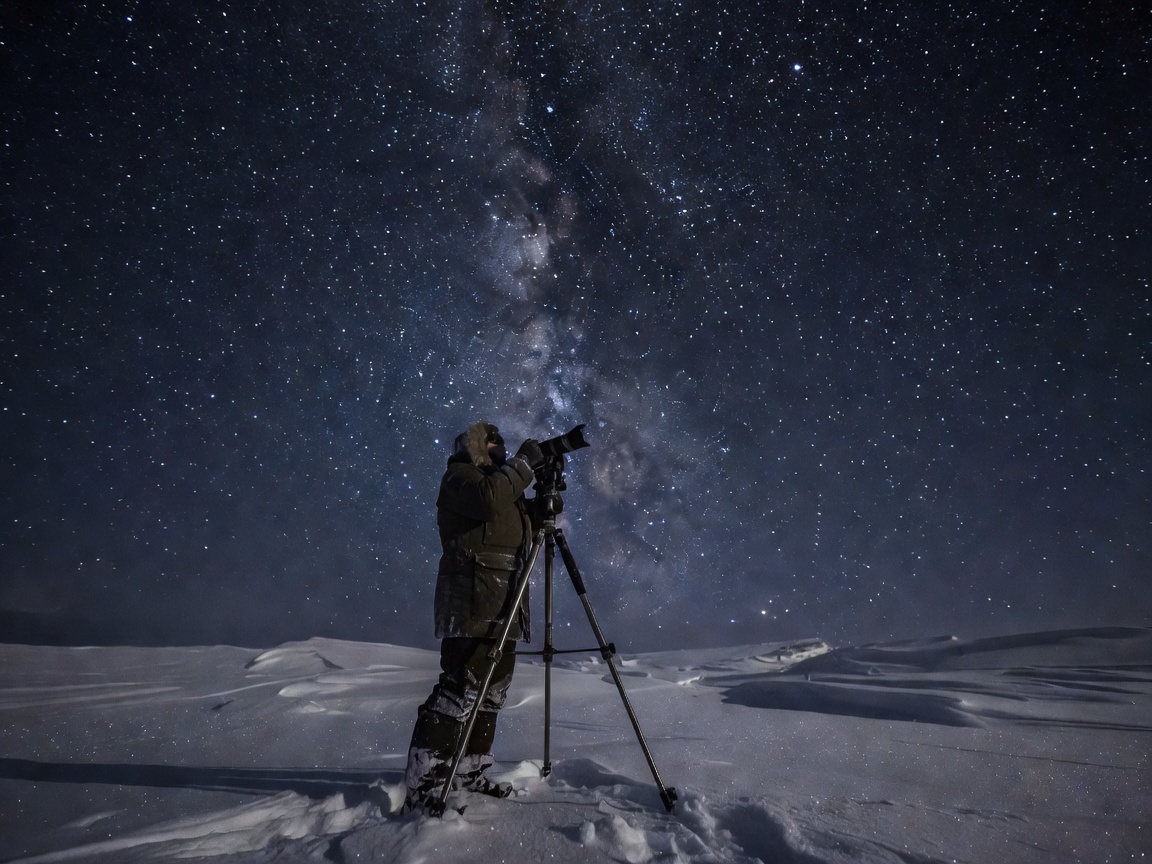
Freezing cold turns photography into an exercise in equipment care. Metal tripod legs can stick painfully to bare skin; camera batteries lose charge at three times their normal rate; and condensation from warm breath can instantly freeze across your front lens element into opaque ice glaze.
Use a sturdy tripod that can handle gusting winds on open fell tops. Set your camera to manual focus (fixed strictly on a distant bright star or the moon using live view magnification), open your aperture wide (f/2.8 or wider), choose an ISO between 1600 and 3200, and start with an exposure of 4 to 8 seconds. If the curtains are moving fast, shorten the shutter speed to 2 seconds to retain structural pleats rather than smearing them into green mush.
Where and How to Wait Out the Night
Standing on a frozen lake at midnight waiting for lights to ignite is exhilarating for the first thirty minutes, and bone-chilling by minute seventy. Comfort is everything.
Night Stargazing Checklist
- Step away from village streetlights: Even modest sodium vapor lamps wash out faint northern displays. Walk 200 meters out onto a frozen lake or into a forest clearing with an unobstructed view facing north.
- Use an insulated foam sit-pad: Never stand still on compact ice in thin-soled boots. Stand on an insulated foam pad or reindeer pelt to block conductive ground chill.
- Thermal flask of hot lingonberry juice: Warm liquid keeps your core temperature up far better than alcohol, which dilates surface capillaries and accelerates core hypothermia.
- Seal your camera in a plastic zip-bag before coming inside: When entering a warm cabin from −20°C, moisture will immediately condense inside delicate camera circuitry. Let the bag acclimate at room temperature for an hour before opening it.
Building Realistic Expectations
If you plan a five-to-seven-night stay in Lapland above the Arctic Circle during the dark months (October through March), and you check cloud projections diligently, your chances of catching at least one memorable display are solid. But treat the lights as an enchanting bonus to an already rich winter holiday — never as the sole benchmark for whether your trip was worthwhile.