The Living Arctic: Taiga, Rime Ice & Polar Twilight
To view the Arctic winter as a dead, frozen season is to miss the subtle pulse running beneath the snow blanket. Underneath a meter of powder, ground temperatures rarely dip below freezing, sheltering dwarf bilberry bushes, voles, and root systems until the spring thaw.
Above the surface, life has adapted with astonishing elegance. From the thermal engineering of willow grouse feathers to the sculptural phenomenon of tykky (crown snow-load), the northern landscape is a masterclass in survival through conservation of energy.
The Architecture of Tykky: Heavy Snow Sculptures
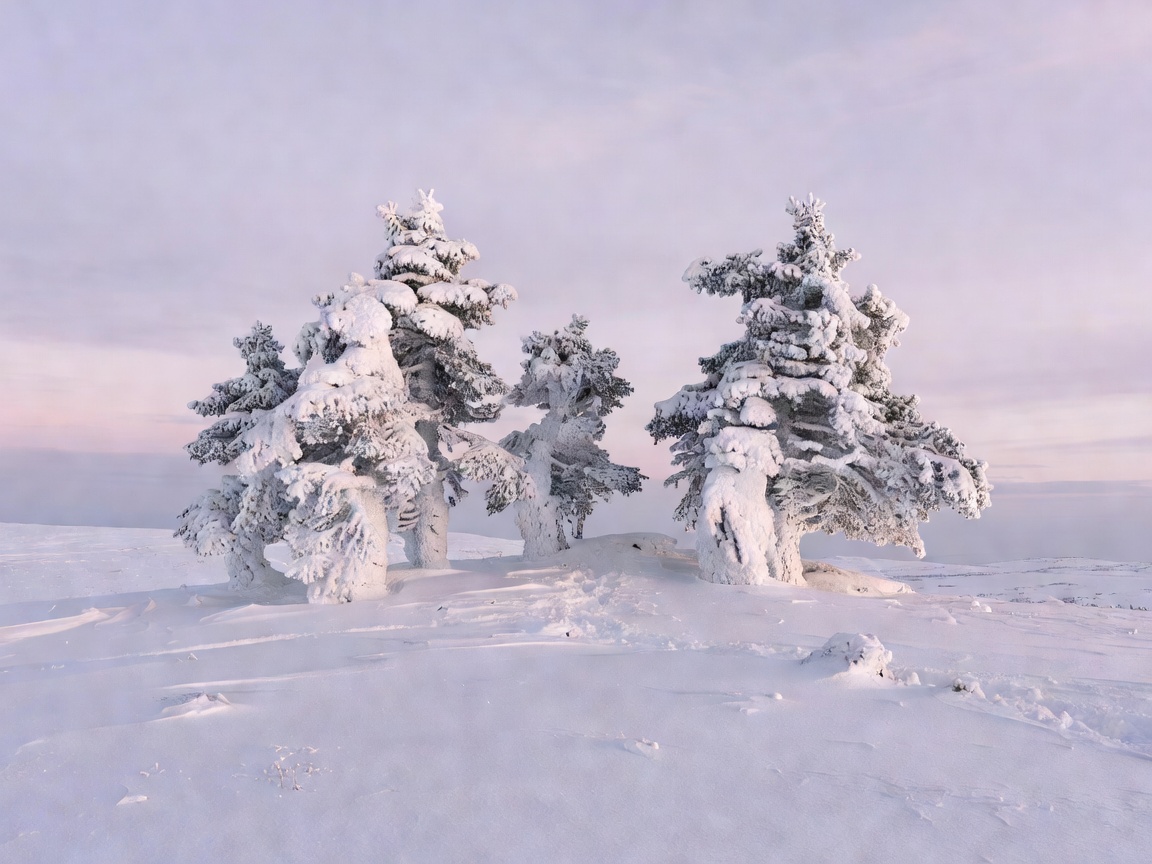
Visitors traveling through high fell terrain often remark on what look like giant white trolls or abstract sentinels standing across the ridgeline. These are candle spruce trees, encased in up to three or four metric tons of dense rime ice and condensed fog.
This phenomenon, known in Finnish as tykky, happens when freezing fog clouds blow across elevated fell summits. The supercooled water droplets strike the narrow spruce needles, freezing instantaneously into solid hoarfrost. Over weeks of sustained cold, the tree branches are compressed flat against the trunk into a unified aerodynamic cylinder. It is breathtaking to photograph, but also hazardous: branches and crowns can snap without warning under sudden wind shear.
The Real Nature of Kaamos
The polar night (kaamos) is frequently misunderstood as pitch-black twenty-four hours a day. In reality, northern Lapland enjoys hours of soft pastel twilight around midday. The sun remains just below the horizon, bathing the snowy landscape in vivid pink, apricot, violet, and deep indigo tones that reflect off billions of snow crystals.
Arctic Wildlife in Deep Winter
Unlike animals that migrate south, year-round Arctic residents face temperatures that can plummet past −35°C. Their tactics offer a fascinating look at evolutionary refinement:
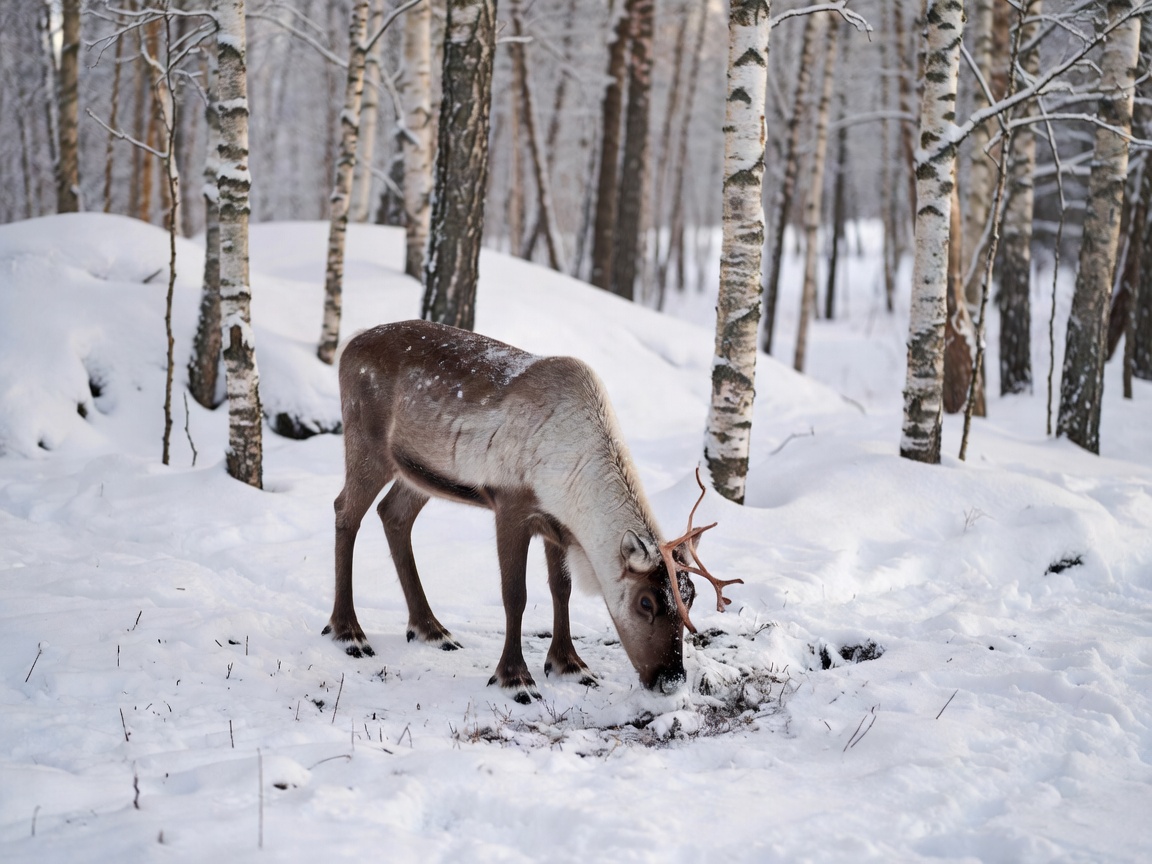
- Reindeer (Rangifer tarandus): Semi-domesticated herds roam freely across Lapland forests. Their hollow hair follicles trap insulating air, and their hooves change shape between seasons — concave in winter to dig like shovels through hard-crusted snow to reach ground lichen (claudia).
- Willow Grouse and Ptarmigan: These birds molt into pure white winter plumage, complete with feathered toes that function as natural snowshoes. During severe storms, they dive headfirst into soft snowbanks to roost inside micro-snow caves where temperatures hover safely around −2°C.
- The Siberian Jay (Kuukkeli): A remarkably friendly, rust-and-slate colored bird that often lands near campfires on outdoor trails. Forest travelers have respected these clever corvids for generations, sharing crumbs of dried meat and bread.
- Mountain Hares: Their coats turn completely snow-white, except for black-tipped ears. They run across light powder without sinking where a human would submerge to the hip.
Respecting Animals on Winter Trails
In extreme cold, an animal forced into a sudden sprint burns precious calorie reserves that cannot easily be replenished when food is buried beneath snow. Running from a tourist holding a smartphone can quite literally be life-threatening for an exhausted reindeer calf or moose.
Maintain a respectful distance of at least thirty to fifty meters. If an animal stops feeding, raises its head, and turns ears toward you, you are already too close. Step back quietly and never attempt to feed processed human snacks or citrus fruits to free-roaming herds.
Everyman's Right and Wilderness Stewardship
The Nordic concept of public access — jokamiehenoikeus — grants everyone the freedom to roam on foot or skis through natural landscapes, regardless of land ownership. But this privilege is inextricably linked with an uncompromising principle of care.
Leave-No-Trace Arctic Checklist
- Pack out everything you pack in: At sub-zero temperatures, organic waste does not decompose. An apple core tossed onto the snow will remain frozen solid and visible until June.
- Use designated fire rings: Building random campfires on rock faces or forest floors can damage centuries-old lichen communities that require decades to recover. Use established huts and lean-tos (laavu).
- Respect deadwood: Never tear bark off live birch trees or chop fallen silver-pine logs for kindling. That standing deadwood (kelo) is critical habitat for rare boreal beetles, woodpeckers, and mosses.
- Keep wilderness hut etiquette: If you use a free wilderness hut (autiotupa), always replenish the firewood you burned, sweep the floor, and leave kindling shaved ready for the next exhausted trekker arriving in the dark.
The Sound of the Arctic Forest
Perhaps the most striking sensation for city dwellers visiting Lapland is the utter lack of background hum. There are no motorways within earshot, no overhead airline routes, and the dry, porous snow dampens acoustic vibrations. In a calm spruce forest on a windless January afternoon, you can hear the soft click of pine needles falling from branches fifty paces away.
Take time to stop, turn off your headlamp, pocket your phone, and stand completely still for five uninterrupted minutes. That quietude is the rarest luxury the far north has to offer.